Table of Contents
Chinese tea culture runs deep in Singapore, shaped by generations of Chinese immigrants who brought their tea traditions with them. Today that heritage shows up everywhere, from century-old teahouses serving gongfu-style tastings to modern tea bars pouring naturally scented oolongs, and grocery shelves stocked with everything from jasmine green tea to aged pu’er.
This guide covers the best Chinese tea in Singapore, explains the main categories, including Chinese green tea, Chinese black tea and Chinese herbal tea, and points you to where to try and buy each one. Whether you are new to Chinese tea or looking to go deeper, this is a practical starting point.
What Is the Best Chinese Tea in Singapore?
The best Chinese tea in Singapore depends on the style you enjoy. Heritage teahouses like Tea Chapter and Yixing Xuan Teahouse are well regarded for traditional gongfu-style tastings, specialist tea bars like Camellia Tea Bar and Antea Social are known for rare oolongs, and retailers like Yue Hwa and Pryce Tea offer a wide range to take home. The right choice depends on whether you want an experience, a specific flavour, or an everyday brew.
Chinese tea covers a genuinely wide category, so understanding the main types first will help you order and shop with more confidence.
Understanding the Main Types of Chinese Tea
All Chinese tea comes from the same plant, Camellia sinensis. What separates one type from another is how the leaves are processed, particularly how much they are oxidised.
| Tea type | Oxidation level | Flavour profile | Well-known varieties |
|---|---|---|---|
| Green tea | Unoxidised | Fresh, grassy, sometimes nutty | Longjing (Dragon Well), Maofeng |
| White tea | Minimally processed | Light, delicate, subtly sweet | Silver Needle |
| Oolong | Partially oxidised | Ranges from light and floral to dark and roasted | Tie Guan Yin, Da Hong Pao |
| Black tea | Fully oxidised | Bold, malty, often sweet | Keemun, Dian Hong |
| Dark tea (pu’er) | Post-fermented | Earthy, smooth, complex with age | Raw and ripe pu’er |
| Yellow tea | Lightly oxidised, gently “yellowed” | Mellow, mild, close to green tea | Meng Ding Yellow Bud |
| Chinese herbal tea | Not tea leaves; herbs, flowers or dried ingredients | Varies widely | Chrysanthemum, osmanthus, goji |
Knowing this table makes it much easier to navigate a tea shop menu, since most shops organise their offerings around these categories.
Chinese Green Tea in Singapore
Chinese green tea is unoxidised, so it keeps the fresh, grassy character of the leaf. It is one of the most approachable starting points for someone new to Chinese tea.
What to look for: Longjing, also called Dragon Well, is one of the most famous Chinese green teas, known for a smooth, slightly nutty flavour. Maofeng is another well-regarded variety, often used as the base for jasmine-scented green tea. Petale Tea, a Singapore-based blooming tea specialist, uses organic Maofeng green tea infused with dried flowers such as jasmine, marigold and carnation, which unfurl into a flower shape when steeped, making it a popular gift as well as a drink.
Brewing tip: Green tea is delicate and can turn bitter if the water is too hot. Water just off the boil, around 75 to 85°C, and a short steep of one to two minutes usually gives the best result.
Where to try it: Heritage teahouses like Yixing Xuan Teahouse carry green tea alongside white, oolong and pu’er, and most specialist Chinese tea retailers, including Yue Hwa, stock a dedicated green tea range.
Chinese Black Tea in Singapore
Chinese black tea, known as “red tea” (hongcha) in China because of its reddish liquor, is fully oxidised. This gives it a bolder, maltier and often naturally sweeter flavour than green tea, closer to what many people already know from everyday tea bags, but with more depth.
What to look for: Keemun and Dian Hong are two well-known Chinese black teas, each with its own character, from Keemun’s wine-like, slightly smoky notes to Dian Hong’s smooth, honeyed sweetness. Chinese black tea is often enjoyed on its own, without milk, to let the natural flavour come through, though it also works well in a classic milk tea.
Brewing tip: Black tea can handle hotter water than green tea, generally just off a full boil, with a steep of three to five minutes depending on strength preference.
Where to try it: Specialist retailers like Yue Hwa Chinese Products stock a dedicated black tea range, and traditional teahouses such as Tea Chapter carry black tea as part of their full range of pu’er, oolong, green, black and floral teas.
Oolong and Other Specialist Chinese Teas
Oolong sits between green and black tea in oxidation level, which gives it the widest flavour range of any Chinese tea category, from light and floral to dark and heavily roasted.
Tie Guan Yin, the “Iron Goddess of Mercy”, is one of the most famous oolongs and can be either lightly oxidised and floral or more deeply roasted and complex. Da Hong Pao, a Wuyi rock tea, is prized for its rich, mineral character.
Modern Singapore tea bars have put a fresh spin on oolong. Camellia Tea Bar specialises in Wuyi rock tea, offering rare varieties like Meng Ding Yellow Bud and Stone Village raw pu’er, alongside workshops where guests learn to brew six different types of Chinese tea. Antea Social, sourcing teas directly from tea makers where possible, focuses on naturally scented oolongs such as Kyoho grape and lychee oolong, both listed at around S$10 a cup.
Pu’er, a post-fermented dark tea from Yunnan, develops complex, earthy flavours as it ages. Specialist retailer OVP Tea focuses specifically on award-winning pu’er alongside black tea, oolong and flower tea, and offers a 90-minute guided tea experience covering the culture, stories and tasting of Chinese tea, suitable for individuals, couples and families.
Chinese Herbal Tea in Singapore
Chinese herbal tea, sometimes called a tisane, is technically not made from the tea plant at all. Instead, it is brewed from dried flowers, herbs, fruit or other botanicals, which means most Chinese herbal teas are naturally caffeine-free.
Common types include:
- Chrysanthemum tea, a cooling, mildly sweet infusion often enjoyed on its own or paired with goji berries or rock sugar.
- Osmanthus tea, fragrant and floral, sometimes blended with green or oolong tea for extra depth.
- Goji berry tea, mild and slightly sweet, often used in traditional Chinese wellness practices.
- Chinese herbal tonics, blends of roots, herbs and dried ingredients associated with traditional Chinese medicine, which can be found at traditional medicine halls as well as tea shops.
Chinese herbal tea is a good choice for an evening drink, since it won’t affect sleep the way caffeinated tea can, and it pairs naturally with Singapore’s warm climate as a cooling, refreshing option served iced.
Where to find it: General retailers like Yue Hwa Chinese Products stock fruit and jasmine blends alongside their main tea range, and dedicated Chinese medicine halls and grocers across Singapore carry dried herbal tea ingredients for brewing at home.
Best Places to Experience Chinese Tea in Singapore
Heritage teahouses
Tea Chapter, founded in 1989 and often described as the largest teahouse in Singapore, is dedicated to the art of Chinese tea appreciation, with a full collection of pu’er, oolong, green, black and floral teas served in a traditional shophouse setting.
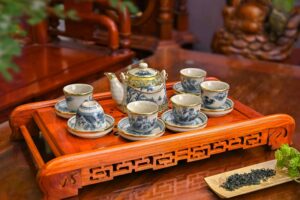
Yixing Xuan Teahouse, now located in Tanjong Pagar, offers green, white, oolong and pu’er tea in different grades, either steeped in a simple mug or served in a traditional gongcha set with a claypot and small cups. The traditional set costs more, at around S$30, but suits a group wanting a fuller, shared experience, and usually comes with a second batch of leaves for extra steeps.
Tian Fu Tea Room at a Beach Road hotel has run one of Singapore’s most approachable traditional Chinese tea programmes since 2008, with more than 30 varieties brewed by in-house connoisseurs who guide you through each pour, often paired with handmade dim sum.
Modern tea bars and specialist rooms
Tea Room by Ki-setsu curates rare Chinese teas sourced from ancient tea gardens and artisanal harvesters, including aged pu’er, premium oolongs and ceremonial-grade teas, centred around a traditional gongfu tea ceremony led by a tea master.
A shophouse tea room on Keong Siak Road runs appointment-only sessions guiding guests through three Fujian teas, white, black and oolong, with teaware matched to each brew, alongside walk-in availability for those who haven’t booked ahead.
Specialist retailers for home brewing
If you would rather brew Chinese tea at home, several Singapore-based retailers focus specifically on this category. Pryce Tea offers premium Chinese teas including oolong, pu’er and tie guan yin, alongside creative blends like Lychee Osmanthus and a caffeine-free Singapore Sling-inspired brew. Yue Hwa Chinese Products carries a broad range spanning black tea, pu’er, green tea, oolong, tie guan yin, white tea, yellow tea, dark tea and fruit and jasmine blends. OVP Tea specialises in award-winning pu’er, black tea and oolong, with free local delivery for orders above S$49.
How to Choose and Brew Chinese Tea
- Start with the flavour family you already enjoy. If you like your tea light and fresh, start with green or white tea. If you enjoy bold and malty, start with black tea. If you’re not sure, oolong offers a bit of both.
- Match water temperature to the tea type. Green and white teas need cooler water, roughly 75 to 85°C, while black tea and pu’er can handle water close to boiling.
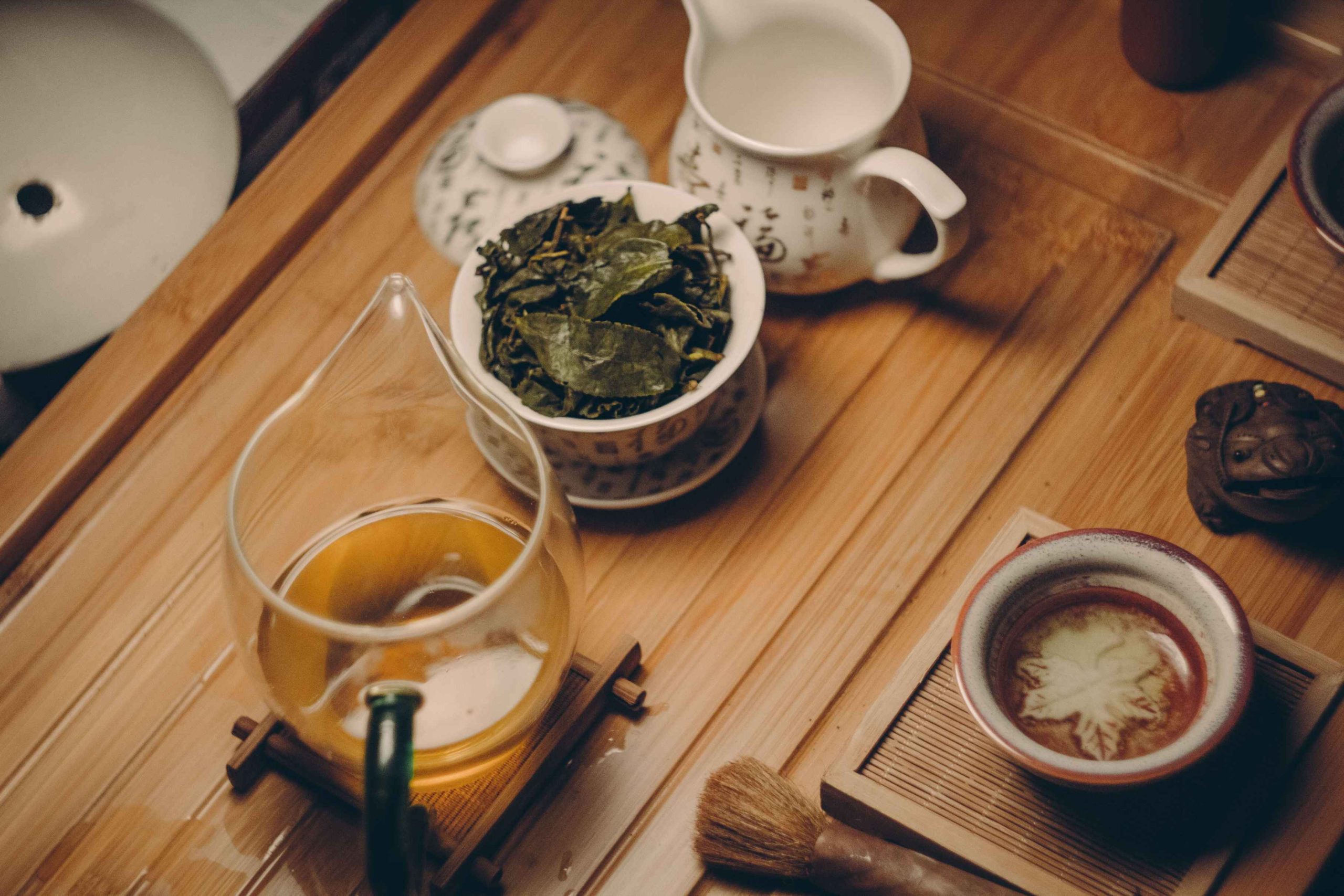
- Use a gongfu-style short, repeated steep for loose leaf tea. Multiple short infusions, rather than one long steep, bring out more flavour over time and let you taste how a tea changes across several pours.
- Ask staff for guidance. Good tea shops and teahouses in Singapore are usually happy to explain a tea’s origin and suggest something based on the flavour profile you describe, whether that’s strong, grassy, floral or earthy.
- Store your tea properly. Keep tea in an airtight container, away from light, heat, moisture and strong smells, since tea absorbs odours easily.
Bring Chinese Tea into Your Everyday Routine
You don’t need a teahouse visit every time you want a good cup. Our tea and coffee range includes black tea, herbal tea bags and flower teas that work well for daily drinking, and the wider drinks selection covers other refreshments to round out your kitchen. If you enjoy exploring more tea styles beyond Chinese tea, our guide to the best tea shops in Singapore covers a wider range of teahouses and tea bars worth visiting, and our roundup of the best fruit tea in Singapore is a good next stop if you’d like something fruitier and more casual.
Frequently Asked Questions
What is the best Chinese tea in Singapore?
It depends on your taste. Heritage teahouses like Tea Chapter and Yixing Xuan Teahouse are well regarded for traditional pu’er, oolong, green and black tea tastings, while modern tea bars like Camellia Tea Bar and Antea Social focus on rare or naturally scented oolongs. Retailers like Yue Hwa and Pryce Tea are good options for home brewing.
What is the difference between Chinese green tea and Chinese black tea?
Green tea is unoxidised, giving it a fresh, grassy flavour, while black tea is fully oxidised, giving it a bolder, maltier and often naturally sweeter taste. Both come from the same plant; the difference comes entirely from how the leaves are processed after picking.
Is Chinese herbal tea the same as Chinese tea leaves?
No. Chinese herbal tea, or tisane, is made from dried flowers, herbs, fruit or other botanicals rather than the tea plant itself, and it is usually caffeine-free. Chinese tea leaves, such as green, black, oolong and pu’er, all come from the Camellia sinensis plant and contain caffeine.
Where can I try traditional Chinese tea in Singapore?
Heritage teahouses such as Tea Chapter, Yixing Xuan Teahouse and Tian Fu Tea Room offer traditional gongfu-style tastings, often guided by staff who explain each tea as they pour it. Some venues, like Camellia Tea Bar, also run hands-on workshops teaching how to brew different types of Chinese tea.
How should I brew Chinese tea at home?
Match the water temperature to the tea type: cooler water, around 75 to 85°C, for green and white tea, and hotter water, closer to boiling, for black tea and pu’er. For loose leaf tea, try several short steeps rather than one long one, which brings out more flavour and lets the tea evolve across pours.
Does Chinese tea contain caffeine?
Tea made from the Camellia sinensis plant, including green, white, oolong, black and pu’er, contains caffeine, with the amount varying by type and brewing time. Chinese herbal teas made from dried flowers, herbs or fruit, such as chrysanthemum or osmanthus tea, are generally caffeine-free.
Final Thoughts
Chinese tea in Singapore ranges from centuries-old brewing traditions to modern, naturally scented blends, and there is a genuine entry point for every kind of drinker. Start with the type that matches your taste, whether that’s a fresh green tea, a bold black tea, a complex oolong or a caffeine-free herbal blend, and let a good teahouse or retailer guide you deeper from there.
If you’d like to bring some of that variety home, start with our tea and coffee collection.
Shop names, locations, prices and opening hours mentioned in this article are indicative and may change. Please confirm current details with each venue or retailer before visiting or ordering. This article is for general information and is not medical advice; consult a healthcare professional before using herbal teas for any health condition.