Walk up to any drinks stall in a Singapore hawker centre and you will see a menu that can baffle first-timers. Kopi-C, teh-O, bandung, Milo dinosaur, yuan yang, Michael Jackson. Some names describe the drink. Others are pure local humour.
This guide explains the traditional Singapore drinks you are most likely to meet: what goes into each one, how it tastes, how to order it and how sweet it usually is. It is written for curious visitors, new residents and anyone who has quietly pointed at the menu and hoped for the best.
Prices change from stall to stall, so we keep to rough ranges here. Treat them as a guide only and check the board before you order.
How to read a drinks stall menu
Most traditional drinks fall into four families. Knowing which family a drink belongs to tells you a lot about what will arrive in your cup.
- Coffee and tea drinks. Kopi, teh and their many variations. They are brewed strong and usually sweetened with condensed milk or sugar.
- Malted drinks. Milo and Horlicks, served hot, iced or piled high with extra powder.
- Syrup and milk drinks. Bandung and its cousins, made with cordial and evaporated or condensed milk.
- “Cooling” drinks. Sugarcane juice, barley, chin chow, lime juice and soya bean milk. Many families think of these as good for “heatiness”, a belief from traditional Chinese food culture rather than medical advice.
Since 30 December 2023, many freshly prepared drinks in Singapore also carry Nutri-Grade marks. We cover what that means near the end of this guide.
Kopi and teh: the everyday classics
Kopi
Kopi is local coffee. The beans, usually robusta, are traditionally roasted with sugar and margarine or butter. The coffee is brewed through a cloth “sock” filter. The result is dark, thick and slightly caramelised. A plain “kopi” comes with sweetened condensed milk.
Kopi has a whole ordering code of its own: O for black, C for evaporated milk, kosong for no sugar, siew dai for less sweet, peng for iced. We have a full table in our guide to the best kopitiams in Singapore, so we won’t repeat it all here.
Sweetness: HealthHub puts a regular cup of kopi at about four teaspoons of sugar, and kopi siu dai at about three and a half.
Teh
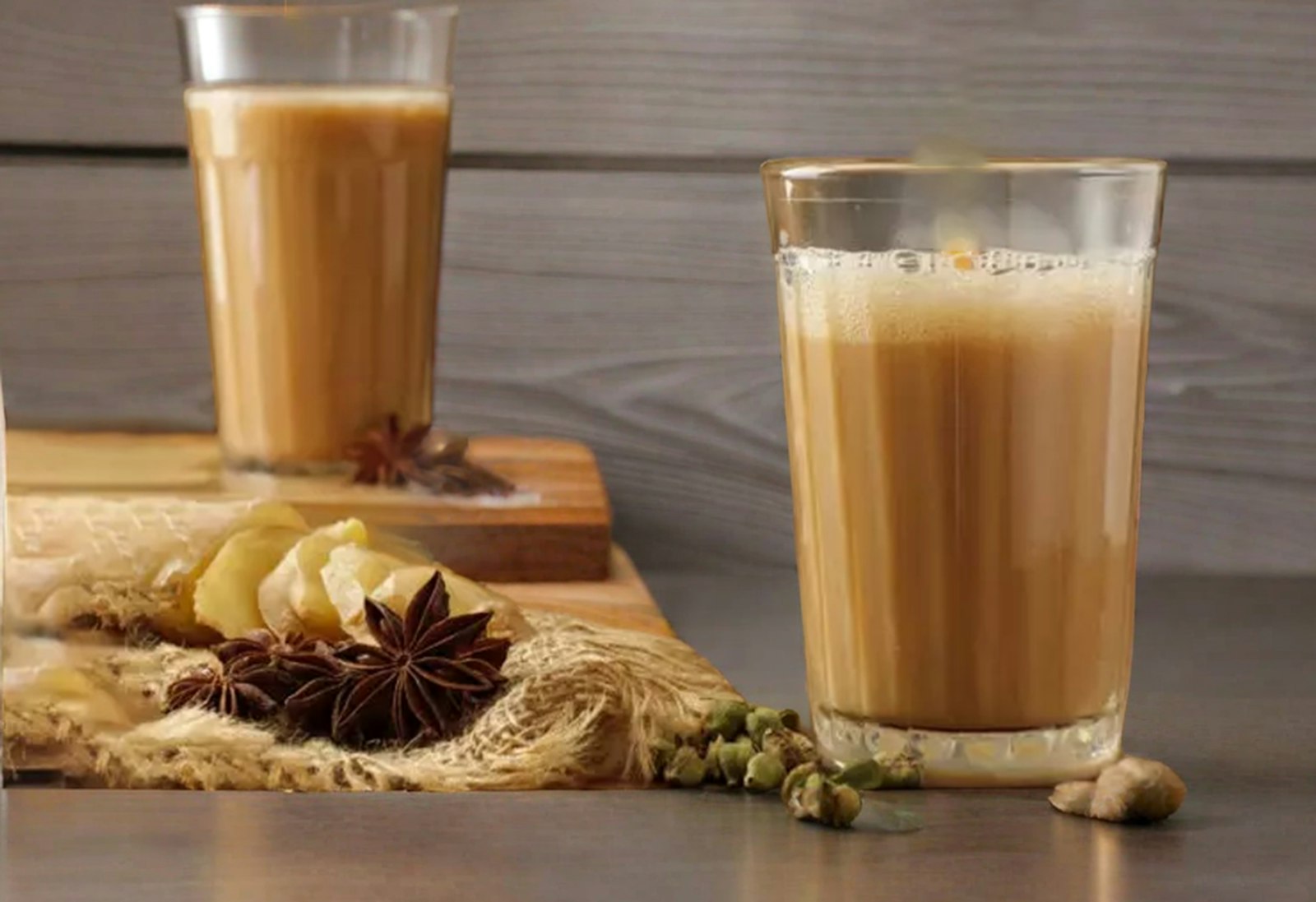
Teh is tea, made the same way: a strong black tea brewed in a long cloth filter and finished with condensed milk. The same suffixes apply, so teh-O is black tea with sugar and teh-C uses evaporated milk.
Sweetness: HealthHub lists a regular teh at about five teaspoons of sugar, more than kopi. Teh-O kosong has none.
Teh tarik
Teh tarik means “pulled tea” in Malay. The tea and condensed milk are poured back and forth between two containers from a height. The “pull” cools the drink and gives it a frothy top.
The National Heritage Board traces it to Indian Muslim immigrants who ran drinks stalls for rubber plantation workers after the Second World War. Today it is the classic partner for roti prata at Indian Muslim eateries and many coffee shops.
How to order it: just say “teh tarik”. Ask for “siew dai” if you want it less sweet.
Teh halia
Teh halia is ginger tea. Fresh ginger juice is added to the tea and condensed milk, and it is often pulled like teh tarik. It is warming, spicy and a good choice on a rainy evening.
Yuan yang (kopi cham)
Can’t decide between coffee and tea? Yuan yang mixes both in one cup. It is also called kopi cham, as “cham” is Hokkien for “mix”. The name comes from the mandarin duck, a Chinese symbol of a well-matched pair. Expect a drink that is a little bitter, a little floral and creamy.
Most coffee shops and kopi chains sell it. You can order yuan yang C or yuan yang O in the same way as kopi.
Malted drinks: Milo and friends
Milo peng and Milo dinosaur
Milo, the chocolate malt drink, is a Singapore staple. Order “Milo peng” for iced Milo. Order a Milo dinosaur and you get iced Milo topped with a heap of undissolved Milo powder.
The Singapore Mandarin Database says it is believed to have been created at a local Indian Muslim stall in the 1990s, with the name inspired by the 1993 film Jurassic Park. Historians note that the origin is still disputed, and Malaysia has its own claim.
Go bigger and you may see a Milo Godzilla, which adds a scoop of ice cream. Some stalls use whipped cream instead.
Worth knowing: this is more dessert than drink. Share it, or have it as a treat rather than with every meal.
Horlicks
Horlicks is a milder malted milk drink, served hot or iced. Older coffee shop regulars sometimes call it “tai ka ho” (大家好, “hello everyone”), a pun on the brand name. It suits children and anyone who wants something comforting without caffeine.
Pink and milky: bandung
Bandung is rose syrup mixed with evaporated or condensed milk. It is bright pink, floral and sweet, and very popular at Malay and Indian Muslim stalls and at weddings and festive gatherings. “Bandung” is a Malay word for things paired or mixed together.
Some stalls whizz it until frothy, and some top it with soda. Bottled and canned versions are also sold in supermarkets.
How to order it: “bandung” or “bandung peng”. If you want it less rich, ask whether they can make it with evaporated milk only.
Cooling drinks from the hawker stall
Sugarcane juice
Sugarcane juice is pressed fresh from the stalks in front of you. It is pale green-gold, grassy and naturally very sweet. Many stalls offer a squeeze of lemon or lime to cut the sweetness. Some also add a preserved sour plum.
The Singapore Food Agency advises stalls to clean the cane and keep it off the floor. Choose a busy stall where the cane is stored in boxes or on racks.
Worth knowing: “natural” does not mean low in sugar. Treat a big cup as a sweet drink.
Barley water
Barley water is made by boiling pearl barley in water, sometimes with pandan leaves or winter melon, and sweetening it lightly. It is mild, slightly nutty and served hot or iced.
Order barley lime (barley limau at some stalls) for a tangy version. Some stalls will make it with less sugar if you ask.
Chin chow (grass jelly drink)
Chin chow is grass jelly, made from the Mesona herb. It is cut into dark, wobbly strips and served in sugar syrup over ice. It tastes faintly herbal and a little bitter, and the jelly gives it a satisfying chew.
“Michael Jackson”
This is soya bean milk with chin chow. The black jelly in white soy milk explains the nickname: it refers to the song “Black or White”. In Mandarin it is often simply called 黑白 (black and white).
It is a staple at soya bean and drinks stalls. Many people like it because the jelly balances the sweetness of the soy milk.
Soya bean milk
Freshly made soya bean milk is sold hot or cold at hawker centres and at chains such as Mr Bean. Stalls normally sweeten it, so ask for less sugar or no sugar if you prefer. HealthHub’s Nutri-Grade page lists Mr Bean’s Classic Soy Milk with Calcium among its Nutri-Grade A and B drinks.
Lime juice and calamansi
Lime juice is freshly squeezed lime with water, sugar and ice. It is sharp and very refreshing, and often comes with a sour plum (ask for “lime juice with plum”). Calamansi juice uses the small local lime, which is a little more fragrant.
Quick-reference table
| Drink | What’s in it | Taste | Lower-sugar tip |
|---|---|---|---|
| Kopi | Local coffee, condensed milk | Strong, thick, sweet | Kopi-O kosong or kopi-C siew dai |
| Teh | Strong black tea, condensed milk | Rich, sweet | Teh-O kosong or teh siew dai |
| Teh tarik | Pulled tea, condensed milk | Frothy, creamy | Ask for siew dai |
| Teh halia | Tea, ginger, condensed milk | Spicy, warming | Ask for siew dai |
| Yuan yang | Coffee and tea mixed, milk | Bitter-sweet, creamy | Yuan yang C siew dai |
| Milo dinosaur | Iced Milo, extra Milo powder | Chocolatey, very sweet | Plain Milo peng, siew dai |
| Bandung | Rose syrup, evaporated or condensed milk | Floral, sweet | Ask for less syrup |
| Sugarcane juice | Fresh-pressed cane | Grassy, very sweet | Small cup, add lemon |
| Barley | Boiled barley, sugar | Mild, nutty | Ask for less sugar |
| Chin chow | Grass jelly, syrup | Herbal, lightly bitter | Ask for less syrup |
| Michael Jackson | Soya bean milk, grass jelly | Creamy, mild | Less-sugar soy milk |
| Lime juice | Fresh lime, sugar, water | Sharp, tangy | Ask for less sugar |
Prices for most of these drinks at hawker centres and coffee shops usually fall somewhere around S$1.50 to S$4 at the time of writing. Milo dinosaur, specialty versions and drinks in malls or chains can cost more. Prices vary by stall and change over time.
Nutri-Grade and your traditional drinks
Nutri-Grade is Singapore’s A to D grading for drinks, based on sugar and saturated fat. It started with packaged drinks in December 2022. From 30 December 2023 it was extended to freshly prepared drinks such as kopi, teh, malted drinks, bubble tea and smoothies.
Drinks graded C or D must show the mark on menus, while A and B labels are optional. Smaller food businesses (revenue of S$1 million or less and fewer than 10 outlets) are exempt for freshly prepared drinks, so many single hawker stalls will not show grades at all.
HealthHub notes that many stalls now serve kopi, teh and malted drinks siu dai by default, and that these are graded B. You can read more on HealthHub’s Nutri-Grade guide.
The simplest habits: ask for siew dai or kosong, go for the smaller cup, and save the Milo dinosaur and bandung for treats. Many of the “cooling” drinks are still sweetened, so the same tips apply. For more on reading drink labels in the supermarket, see our guide to food labels.
Where to try them
- Kopi, teh, yuan yang and Milo: any coffee shop or hawker centre drinks stall. For heritage spots, see our kopitiam guide.
- Teh tarik, teh halia, bandung and Milo dinosaur: Indian Muslim eateries and prata shops, many open late or 24 hours.
- Sugarcane, barley, chin chow, lime juice and Michael Jackson: dedicated drinks and soya bean stalls in hawker centres.
If you prefer café-style drinks, browse our lists of the best cafés in Singapore and the best specialty coffee roasters. Wondering which to drink more of? Our piece on tea vs. coffee compares the two.
Frequently asked questions
What is the most popular traditional drink in Singapore?
Kopi and teh are the everyday favourites, drunk at breakfast and throughout the day. Teh tarik, Milo peng and sugarcane juice are also very common at hawker centres.
Why is it called Milo dinosaur?
It is iced Milo topped with a mound of Milo powder. The Singapore Mandarin Database says the name is believed to have been inspired by the 1993 film Jurassic Park. The exact origin is still disputed.
What is the difference between teh and teh tarik?
Both use strong black tea and condensed milk. Teh tarik is “pulled” between two containers from a height, which cools it and gives it a frothy top.
Is sugarcane juice healthy?
It is fresh and has no added sugar, but it is naturally very sweet. Treat it as an occasional sweet drink, choose a smaller cup and add lemon if you like.
How do I order a less sweet drink?
Say “siew dai” (less sweet) or “kosong” (no sugar) after the drink name, for example “teh siew dai” or “kopi-O kosong”. Many stalls also make barley, lime juice and soya bean milk with less sugar on request.